Malaria rapid test: Pf/Pv vs Pf/Pan — which one to choose
A Pf/Pv rapid test tells Plasmodium falciparum and Plasmodium vivax apart, which suits areas where these two species cause most cases. A Pf/Pan test detects P. falciparum plus any Plasmodium species through a shared ("pan") antigen, without naming which non-falciparum species it is. Both are screening tests read in minutes.
How a malaria rapid test works
Malaria rapid diagnostic tests (RDTs) detect parasite proteins (antigens) in a drop of blood. WHO describes the common targets: HRP2 and pf-LDH, which are specific to P. falciparum; pv-LDH, specific to P. vivax; and pan-LDH, which is shared by all human malaria species.
Pf/Pv vs Pf/Pan at a glance
| Pf/Pv antigen test | Pf/Pan antigen test | |
|---|---|---|
| Detects | P. falciparum and P. vivax separately | P. falciparum, plus any species via pan antigen |
| Names the species? | Yes, Pf or Pv | Pf yes; others shown only as "Pan" |
| Typical use | Where falciparum and vivax dominate | Where other species also occur, or as a broad screen |
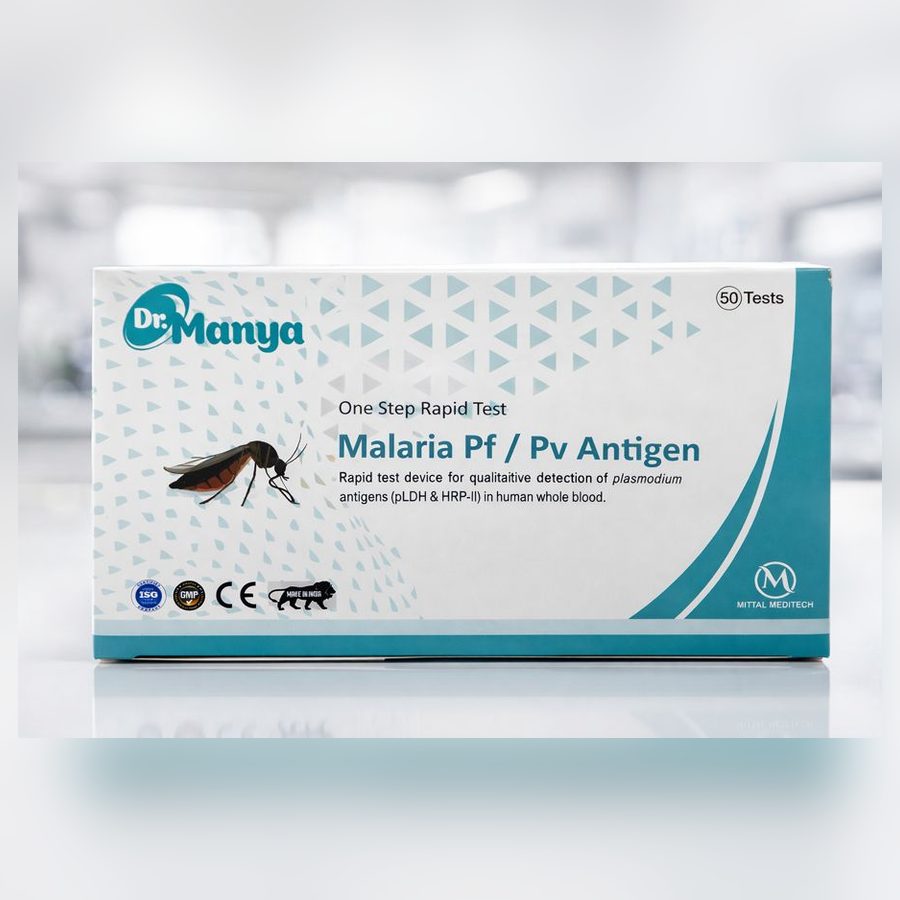
| Dr. Manya kit | Malaria Pf/Pv Antigen Test | Malaria Pf/Pan Antigen Test |
Why WHO cares about the target antigen
Some P. falciparum parasites lack the HRP2 gene, so HRP2-only tests can miss them. WHO advises that where these deletions reach 5% or more, programmes should move away from HRP2-only tests towards kits that also detect pf-LDH or pan-LDH. Labs choosing a kit should check which antigens it targets and follow their state programme guidance.
Reading the result
Every cassette has a control line (C) that must appear for the test to be valid. Test lines show which antigen was found. Follow the time in the leaflet exactly; reading too late can show faint false lines. A positive RDT guides treatment decisions by a doctor; microscopy remains the reference for counting parasites.
Sources
Medical facts in this guide are taken from the sources above and reviewed when they change. Found an error? Tell us.