Dengue test: NS1 vs IgM/IgG — which test to use and when
Use an NS1 antigen test in the first 7 days of fever, and an IgM antibody test from about day 3 onwards. A combo kit (NS1 + IgG/IgM) covers both windows in one cassette. A single IgG result does not confirm a new dengue infection, because IgG can remain from a past infection.
→ Compare dengue test kits & prices
What dengue is
Dengue is a viral infection spread mainly by the bite of infected Aedes aegypti mosquitoes. According to the WHO, symptoms usually start 4–10 days after infection and last 2–7 days: high fever, severe headache, pain behind the eyes, muscle and joint pain, nausea, vomiting, swollen glands and rash. There is no specific antiviral treatment, so early testing helps doctors monitor patients for warning signs.
Which test works on which day
The right test depends on how many days the patient has had symptoms. CDC testing guidance says NS1 antigen tests can be as sensitive as molecular tests during the first 0–7 days, and that IgM tests can identify most recent infections after day 3.
| Day of illness | Best rapid test | What it detects |
|---|---|---|
| Day 1–3 | NS1 antigen | A viral protein released during active infection |
| Day 3–7 | NS1 + IgM (combo kit) | Both the virus protein and the body's early antibodies |
| After day 7 | IgM (and IgG in paired samples) | Antibodies; NS1 may no longer be reliable |
Why a combo kit is used in clinics
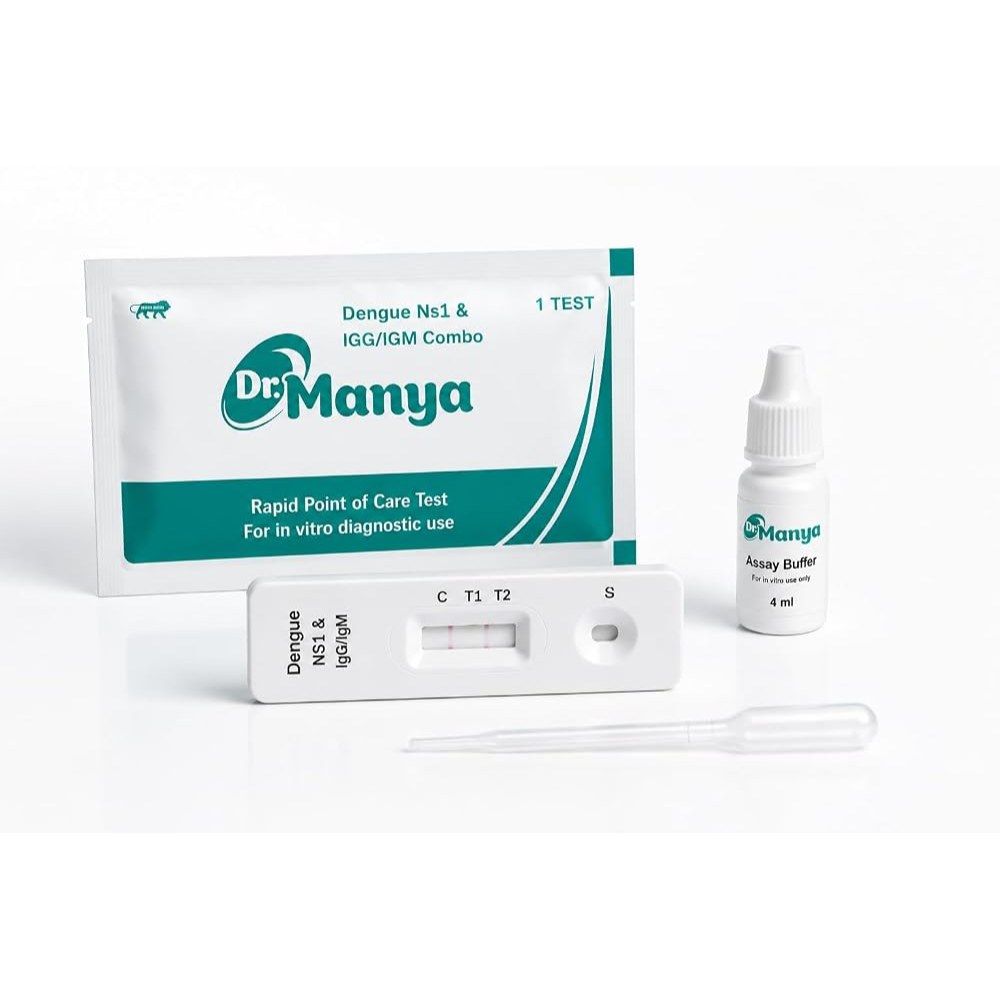
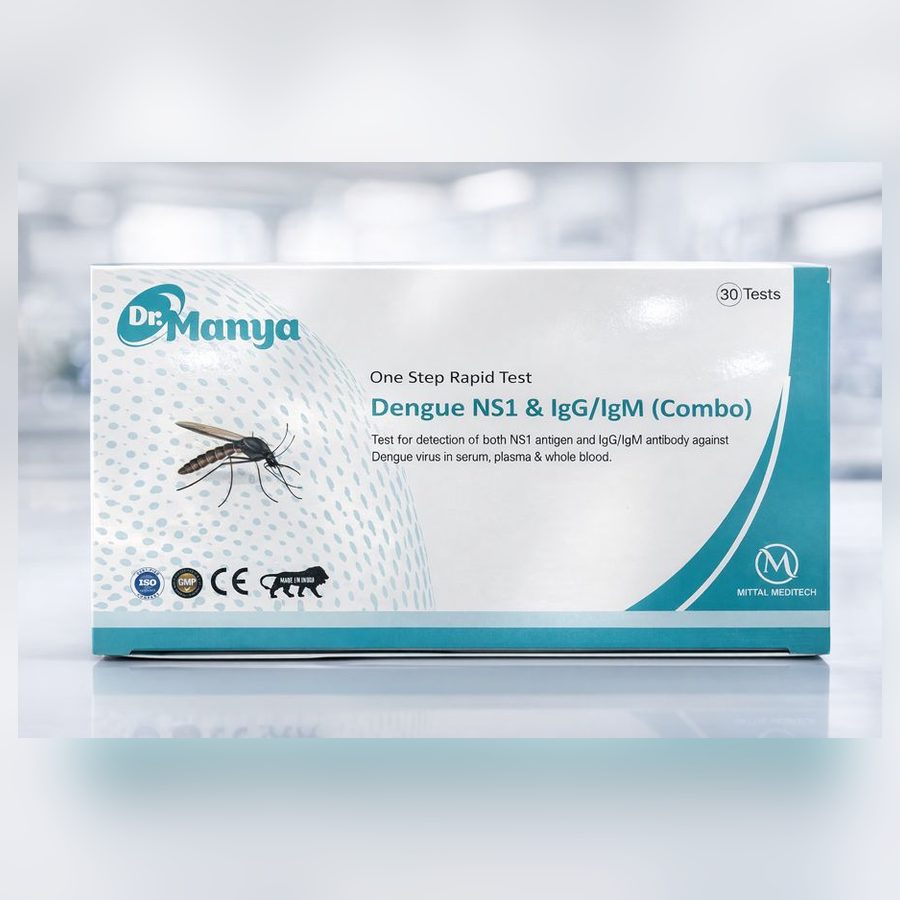
Most patients reach a clinic between day 2 and day 6 of fever, when it is hard to know whether NS1 or IgM will be positive. A combo cassette such as the Dr. Manya Dengue NS1 + IgG/IgM Combo Kit runs both tests from one sample, which reduces the chance of missing an infection because the wrong test was chosen for the day.
What about IgG?
IgG antibodies can remain for years after a past dengue infection, so CDC does not recommend a single IgG result for diagnosing acute dengue. A change from IgG-negative to IgG-positive across two samples, or a strong IgG with IgM, is interpreted by the doctor together with symptoms.
When to see a doctor straight away
WHO lists warning signs of severe dengue: severe abdominal pain, persistent vomiting, rapid breathing, bleeding gums or nose, fatigue, restlessness, and blood in vomit or stool. Anyone with these signs needs urgent medical care, whatever a rapid test shows.
Sources
Medical facts in this guide are taken from the sources above and reviewed when they change. Found an error? Tell us.